
As an Amazon Associate we earn from qualifying purchases. Prices and availability change often, so check the current price on Amazon before you buy.
During a camping trip, a sudden storm can turn a peaceful outing into a dangerous situation. Missing crucial weather updates can lead to poor decisions and safety risks.
Emergency radios equipped with NOAA alerts provide essential information about severe weather. Those who choose the right radio ensure they stay informed and prepared.
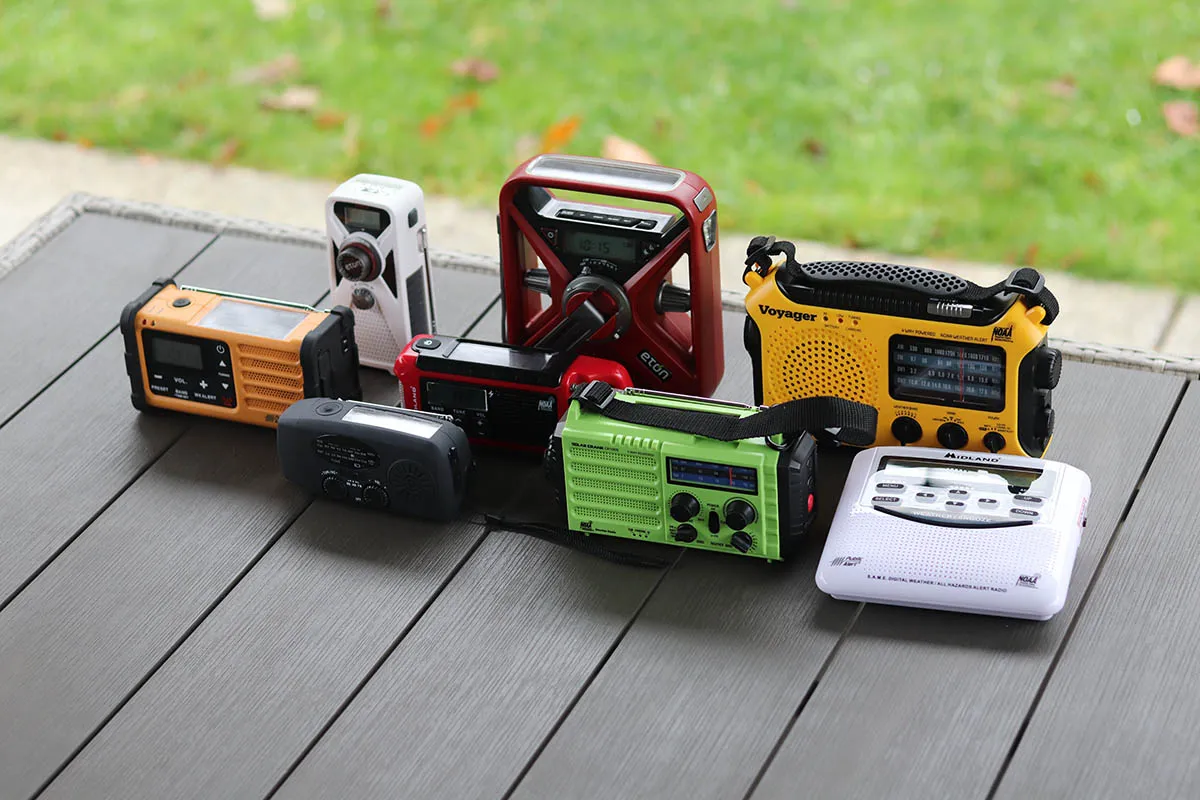
The Midland WR120B NOAA Emergency Weather Alert Radio excels with its detailed local weather alerts. For those needing flexibility in power sources, the Raynic Emergency Radio offers the most versatile charging options.
We compared 8 options currently sold on Amazon and ranked them on how well each fits this use, its published specs and features, price, and customer ratings, giving more weight to ratings backed by many reviews. We haven’t tested these products hands-on; the picks are based on that data.
- Midland WR120B NOAA Emergency Weather Alert Radio
- Raynic Emergency Radio, Solar Hand Crank Radio
- FosPower NOAA Emergency Weather Radio A1 Solar Hand Crank
- Emgykit Emergency Radio Hand Crank Solar – R11 NOAA/AM/FM Shortwave Radio
- PRUNUS J-369 Emergency Weather Radio NOAA/AM/FM
- Eoxsmile Emergency Radio with NOAA Weather Alert
- KAYINOW Solar Hand Crank Emergency Radio
- Mesqool Solar Radio Emergency Hand Crank 12000mAh
Quick comparison
1. Midland WR120B NOAA Emergency Weather Alert Radio

In remote areas, receiving timely weather updates can be critical. Users who prioritize localized alerts benefit significantly from the Midland WR120B's S.A.M.E programming capabilities.
Pros:
- S.A.M.E programming alerts for specific counties
- Covers over 60 weather hazards and emergencies
- Color-coded indicators show alert type and severity
- Continuous backlighting for easy reading in low light
- Alerts override other functions for timely notifications
Cons:
- Limited features compared to models with Bluetooth connectivity
- No multiple charging options like some competitors
In emergency situations, timely weather alerts can be lifesaving. The Midland WR120B provides specific alerts for local weather hazards, allowing users to prepare effectively for impending dangers.
S.A.M.E programming enables receipt of alerts tailored to specific counties, ensuring that users receive critical information relevant to their exact location. This feature is particularly advantageous for those camping in remote areas.
Color-coded alert indicators help users quickly assess the severity of the situation. This means that whether it is a minor advisory or a severe weather warning, the user can respond appropriately and promptly.
Although it lacks additional features found in some other models, such as Bluetooth connectivity, the focus on localized alerts makes it a strong choice for those prioritizing emergency readiness.
2. Raynic Emergency Radio, Solar Hand Crank Radio

The 6-way charging options mean this radio suits those who may face power outages or remote conditions. Campers and hikers benefit from its adaptability to various charging methods.
Pros:
- 6-way charging options: charge with solar, hand crank, USB or batteries
- Automatic NOAA alerts: receive real-time weather warnings without constant tuning
- Large HD LCD display: easily view battery status and channel frequency
- Built-in flashlight and SOS alarm: critical for emergencies and power outages
- Lightweight and portable: easy to carry during outdoor adventures
Cons:
- Flashlight brightness may be lower than competitors
- No included AAA batteries for backup power
The 6-way charging capability allows use of solar power, hand crank, USB, and batteries. This feature is essential for remote camping trips where power sources may be limited. Campers can recharge the radio through various means, ensuring they stay informed.
Automatic NOAA alerts provide timely weather warnings, which are crucial for safety. Users can prepare for impending storms without constantly monitoring broadcasts. This feature particularly benefits those in areas prone to severe weather.
3. FosPower NOAA Emergency Weather Radio A1 Solar Hand Crank

When camping in remote areas, reliable power and communication are essential. A built-in power bank allows charging of devices like phones and tablets, addressing the challenge of staying connected without traditional power sources.
Pros:
- 7400mWh power bank for charging small devices
- Three power sources including hand crank and solar panel
- Two light sources with 4 LED reading light and flashlight
- NOAA weather broadcasts for timely emergency updates
- Limited lifetime warranty for added assurance
Cons:
- Emergency light sources may lack power compared to competitors
- No display for battery levels like some other models
This radio stands out with its 7400mWh power bank, allowing it to charge devices in addition to providing weather updates. In contrast, the Raynic Emergency Radio has a larger display but lacks the built-in power bank, which limits its utility in charging devices.
The three power sources ensure reliability in various conditions. The FosPower's hand crank and solar panel generate power effectively, whereas the Midland WR120B focuses more on NOAA alert features without similar charging capabilities.
While the emergency light output on the FosPower may be less powerful than some competitors, its dual functionality as a power bank makes it a practical choice for those prioritizing device charging during camping trips.
4. Emgykit Emergency Radio Hand Crank Solar – R11 NOAA/AM/FM Shortwave Radio

Outdoor enthusiasts often face unexpected weather changes while camping. This emergency radio offers essential alerts and power options to stay informed and connected.
Pros:
- 7 NOAA/AM/FM/SW bands: access to multiple channels and weather alerts
- Bluetooth 5.0: stream music from devices for entertainment
- 120LM flashlight: illuminates dark areas for safety
- 3 charging options: rechargeable battery, hand crank, and solar power
- Stores up to 210 channels: automatic digital scanning simplifies tuning
Cons:
- Limited playback time on full power compared to larger models
- Size may be bulky for minimalists seeking lightweight gear
This radio is designed for camping in remote areas where weather conditions can change rapidly, ensuring you receive timely NOAA alerts. The ability to store up to 210 channels means you can tune into local stations or weather updates with ease.
Multiple power sources provide flexibility for extended use. The built-in rechargeable battery offers up to 32 hours of playback, while the hand crank and solar charging ensure continued operation during emergencies.
5. PRUNUS J-369 Emergency Weather Radio NOAA/AM/FM

Those who spend time in remote areas often face unreliable cell service for weather alerts. This radio provides a reliable way to stay informed about weather conditions, ensuring safety during outdoor activities.
Pros:
- NOAA, AM, FM bands offer consistent weather updates
- 5 power supply options include hand crank and solar
- 3000mAh power bank charges devices during outages
- SOS alarm feature signals for help in emergencies
- LED flashlight illuminates dark areas at night
Cons:
- Requires AA batteries for radio function
- Limited to basic weather and news formats
This radio excels in providing reliable weather information and emergency alerts, making it a valuable tool for outdoor enthusiasts.
Its ability to function on multiple power sources, including solar and hand crank, ensures it remains operational in various situations, though its reliance on AA batteries may require additional preparation.
6. Eoxsmile Emergency Radio with NOAA Weather Alert
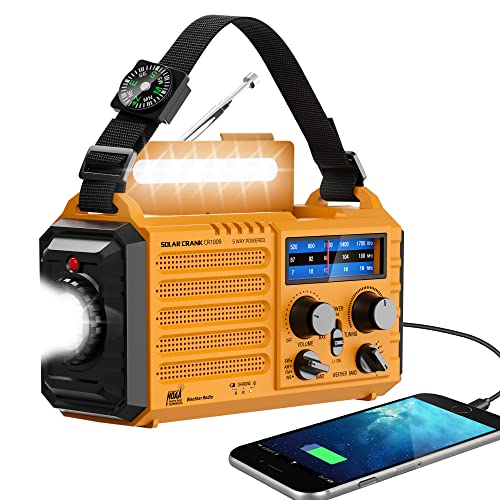
People who camp in remote areas face the risk of sudden weather changes. Multiple power sources ensure this radio stays functional when others fail.
Pros:
- NOAA alerts with loud SOS alarm for emergencies
- Five power sources for extended use during trips
- AM, FM, and shortwave for diverse listening
- LED flashlight illuminates 80 meters for safety
- USB output charges devices in emergencies
Cons:
- Size may be bulkier compared to other options
- Longer charging time needed for solar power
The NOAA weather alert feature provides peace of mind by ensuring you receive critical weather updates and emergency warnings. This radio's ability to sound a loud SOS alarm makes it a crucial tool during severe weather events.
While the size may be less portable than other emergency radios, the trade-off is its extensive power options and robust features. Campers who prioritize reliable communication and safety will find the Eoxsmile radio especially valuable.
7. KAYINOW Solar Hand Crank Emergency Radio
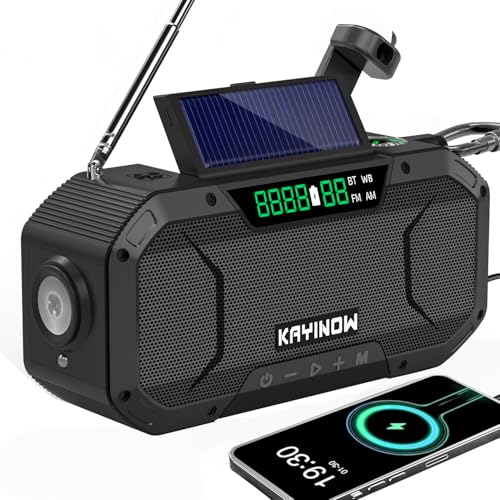
Camping trips can lead to unexpected weather conditions. This radio helps keep you informed with NOAA alerts and AM/FM signals, essential for safety in remote areas.
Pros:
- 7 NOAA weather channels: stay informed about local conditions
- 5000mAh rechargeable battery: power your phone during emergencies
- IPX5 waterproof rating: withstands rain and splashes
- Hand crank and solar charging: ensures power during outages
- SOS alarm feature: alerts rescuers in emergencies
Cons:
- Bluetooth feature may not appeal to users seeking simplicity
- Smaller speaker might limit audio clarity for music lovers
Outdoor activities can expose individuals to sudden weather changes, making real-time updates critical. This radio scans and provides NOAA weather alerts, helping users stay aware and prepared.
The combination of a powerful 5000mAh battery and multiple charging methods, including hand crank and solar, addresses the risk of losing power while in remote areas.
While the Bluetooth capability offers music playback, it might distract from the primary purpose of emergency communication.
8. Mesqool Solar Radio Emergency Hand Crank 12000mAh

Campers and outdoor enthusiasts who need a dependable emergency radio. This model offers multiple power options and superior reception to keep you informed during storms or outages.
Pros:
- High-sensitivity signal chip: clear reception across NOAA, AM, FM bands
- 8500mm² solar panel: faster charging in low-light conditions
- Upgraded hand crank: doubles charging efficiency for quick power
- 12000mAh battery: powers devices for days during emergencies
- LED flashlight: bright beam for navigation in dark conditions
- User-friendly design: easy operation with non-slip grip
Cons:
- Size may not fit all camping gear easily
- Flashlight and reading light require battery power
The 12000mAh battery provides substantial capacity for charging devices and powering the radio. This means that during power outages or emergencies, users can rely on the radio to stay informed and keep their essential devices charged over extended periods.
The 8500mm² solar panel distinguishes itself in charging speed, capturing more sunlight than typical models. Campers frequently in low-light conditions benefit from faster charging, allowing them to maintain access to weather updates and communication without worrying about running out of power.
Common Mistakes to Avoid When Choosing Emergency Radios for Camping
Overlooking Weather Alert Features
Buyers often focus on battery life and neglect the importance of weather alerts. The Midland WR120B offers coverage for over 60 hazards, making it ideal for those who need detailed local weather updates.
Ignoring Power Source Options
Some shoppers may select radios with limited charging options. The Raynic Emergency Radio provides six ways to charge, ensuring reliable power even in emergencies.
Not Considering Battery Capacity
Buyers might choose radios without evaluating battery capacity. The Mesqool Solar Radio packs a 12000mAh battery, which can sustain extended use during long camping trips.
Neglecting Portability
Shoppers may overlook the size and weight of the radio. The Raynic Emergency Radio is lightweight at 1.2 lbs, making it easy to carry on outdoor adventures.
Focusing Solely on Radio Functionality
Many buyers forget that some radios offer additional features. The FosPower NOAA Emergency Weather Radio serves as both a radio and a power bank, providing extra utility during emergencies.
Frequently Asked Questions
What is the best emergency radio for weather alerts?
The Midland WR120B NOAA Emergency Weather Alert Radio is the best for weather alerts. It covers over 60 hazards and allows for programming alerts for up to 25 counties.
How long do emergency radios last on a charge?
Battery life can vary by model. For example, the PRUNUS J-369 has a 3000mAh battery, providing sufficient power to keep you informed during camping trips.
Is it worth investing in a solar emergency radio?
Yes, a solar emergency radio is a worthwhile investment. The KAYINOW Solar Hand Crank Emergency Radio can be charged via solar power, ensuring functionality even in isolated areas.
Can emergency radios charge other devices?
Yes, some emergency radios offer power bank functionality. The FosPower NOAA Emergency Weather Radio A1 doubles as a power bank with a capacity of 7400mWh.
How many channels can emergency radios store?
Channel storage varies between models. The Emgykit Emergency Radio can store up to 210 channels, offering a wide range of listening options.
Do emergency radios provide reliable reception?
Yes, many emergency radios are designed for reliable reception. The Eoxsmile Emergency Radio features multiple weather bands for consistent access to updates.
Which Emergency Radio is Right for You?
The Midland WR120B is the best overall for emergency alerts, providing comprehensive coverage for weather hazards. For versatile charging, the Raynic Emergency Radio excels with its multiple power options. The FosPower NOAA Emergency Weather Radio is ideal for those needing a power bank with radio access. Choose based on your specific camping needs for optimal preparedness.

One thought on “8 Best Emergency Radios for Remote Camping Trips in 2026”